



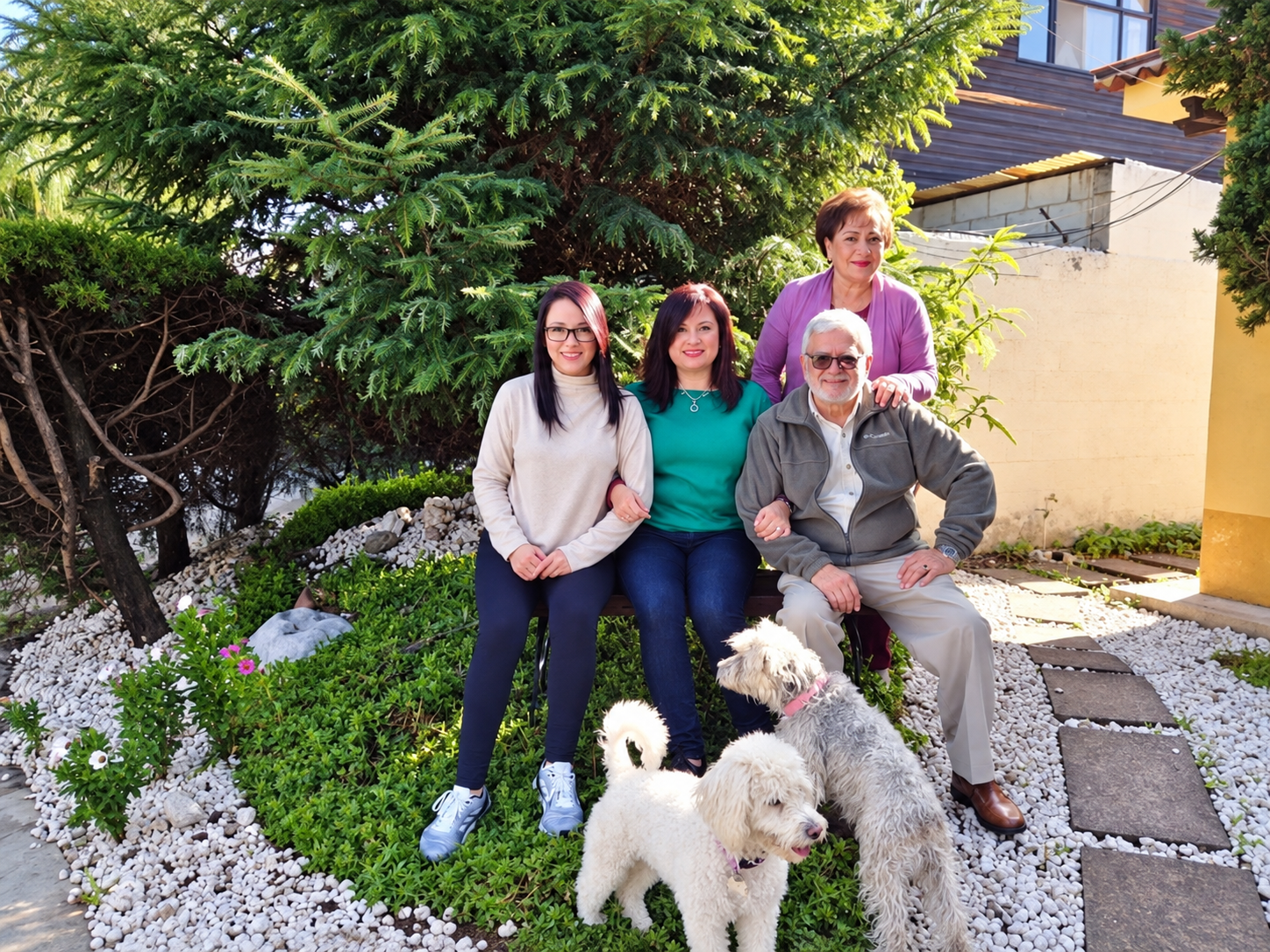
The Legacy of ACD GuatemalaThe Muñoz Argueta Family and the Origins of ACD Guatemala
The story of ACD Guatemala, which stands for Association for Creativity and Development, began long before there was an association. Its roots lie in the life of the Muñoz Argueta family, their dedication to education, entrepreneurship, and Compassion, the experiences that shaped them, and the conversations they always shared around the table. Having grown up in a country marked by deep inequalities and persistent gaps in access to opportunities that have disadvantaged much of the population, the family developed a lasting concern for the well-being of their communities.
César Muñoz and Sonia Argueta built a life devoted to education, business, and entrepreneurship, enriched by travels around the world. Their work and international experiences allowed them to build a stable life in Guatemala and broaden the opportunities available to their family. They believed those opportunities should also be extended to others and used to make a meaningful contribution to their country.
César, a businessman and owner of local businesses, also taught at the university level for more than thirty years. His background in business administration and graduate studies in human resources and quality management strengthened a lifelong conviction: people can develop their best talents when they have room for their ideas and creativity. Sonia, also a proffessor, spent more twenty five years sharing her culinary and entrepreneurship skills in rural communities. Through teaching and working with women, she helped turn everyday skills into opportunities for learning and earning an income.
César and Sonia had three children: Irene, David, and Lucía. From the beginning, they invested deeply in their children’s education, creating opportunities for them to learn, develop their talents, and explore the world.
But in 1994, the Muñoz Argueta family experienced a loss that profoundly changed their lives. Their son David, who had suffered from chronic asthma since childhood, died at the age of fourteen, despite having access to the best medical help the family could seek. His death left a grief that remains part of the family’s memory and deepened their concern for families facing illness without access to treatment, transportation, or even enough money to buy medicine.
César and Sonia already cared deeply about Guatemala’s challenges. Losing David strengthened their compassion and their desire to do something for people with fewer opportunities. In time, that concern found a concrete expression in ACD Guatemala.
Irene and Lucía grew up with that example. César and Sonia encouraged both daughters to explore Guatemala, learn languages, travel, and broaden their understanding of the world. Their experiences in the United States, Mexico, Spain, France, and other European countries, together with their studies of social issues and human rights, gradually directed them toward human development, community work, and international development cooperation. Both returned to Guatemala to continue their journey because they felt a strong need to reconnect with their country and contribute to its transformation. They brought with them new ideas, lessons, and models they had encountered abroad, eager to explore how those experiences could support meaningful change in Guatemala.
Beginning in 200, Irene and Lucía worked with the Methodist Church in community activities. That experience expanded their understanding of both community needs and the practical work of organizing nonprofit initiatives. They learned to collaborate across cultures, connect with different causes, and translate a desire to help into coordinated action. Their involvement with local and nonprofit organizations, together with articles they wrote for local newspapers about poverty and ways to overcome it, reinforced their commitment to contributing to Guatemala through several complementary paths.
By 2006 and 2007, César and Sonia had already retired from their businesses and main professional responsibilities. They began discussing with their family the possibility of creating an association that would give a lasting home to their shared commitment. Having participated in different groups throughout their lives, they wanted to bring together people who shared a sense of responsibility toward their community.
Lucía remembers César inviting Sonia, their daughters, and friends to share a dream over coffee and cake, one of his favorite treats. He sought people with generous hearts, strong reputations, and a willingness to take responsibility for building something together. Coffee and cake were a constant presence, and other conversations unfolded around the family table after meals. They talked about how to connect with communities and turn their ideas into practical possibilities. ACD Guatemala began in those familiar gatherings and in the determination to carry the conversations forward.
César invited many people, although only a few ultimately took on the commitment. Creating an organization was a substantial responsibility. Those who joined offered their talents and knowledge and helped give life to the association. The family sought people of integrity, with respected reputations and a willingness to build programs ranging from responses to basic needs to more complex human development initiatives. From the beginning, César imagined that this work could eventually reach other places as well.
During the years of preparation, César, Sonia, and Lucía, together with board members and a few friends from the U.S, began visiting communities and meeting local groups. They spent approximately two years listening, observing, and exploring where there was a shared interest in working together. One of the family’s most important convictions was exactly that: listen to people’s needs before assuming what the response should be.
Meanwhile, Irene was developing extensive work with migrant populations. Her work helped advance the decentralization of services of Guatemala’s Ministry of Foreign Affairs, bringing them closer to communities from which migrants often originated. For the family, this was an important step toward connecting institutions with the realities people faced in rural Guatemala. Irene’s observations and the lessons she gathered became a valuable source of information for the emerging organization. Alongside Lucía’s social research and community work, they helped shape programs grounded in people’s experiences and designed with a clear purpose of strengthening local opportunities so that individuals and families could build dignified lives in Guatemala without feeling compelled to leave their country.
Legal registration took time. After a process lasting a little over two years, ACD Guatemala had its bylaws, documentation, and government recognition in place in 2012. With that stage completed, the family and their collaborators faced a new question: how to turn everything they had learned into programs they could sustain.
By then, Irene and Lucía had progressed in their studies and gained professional experience in Guatemala, the United States, and Mexico. Irene strengthened their understanding of migration through her diplomatic work and, later, her consular protection work in California. Lucía continued working with communities in Guatemala. Irene’s experiences with migrant populations and the stories Lucía gathered in Guatemalan communities helped them understand different dimensions of the same reality.
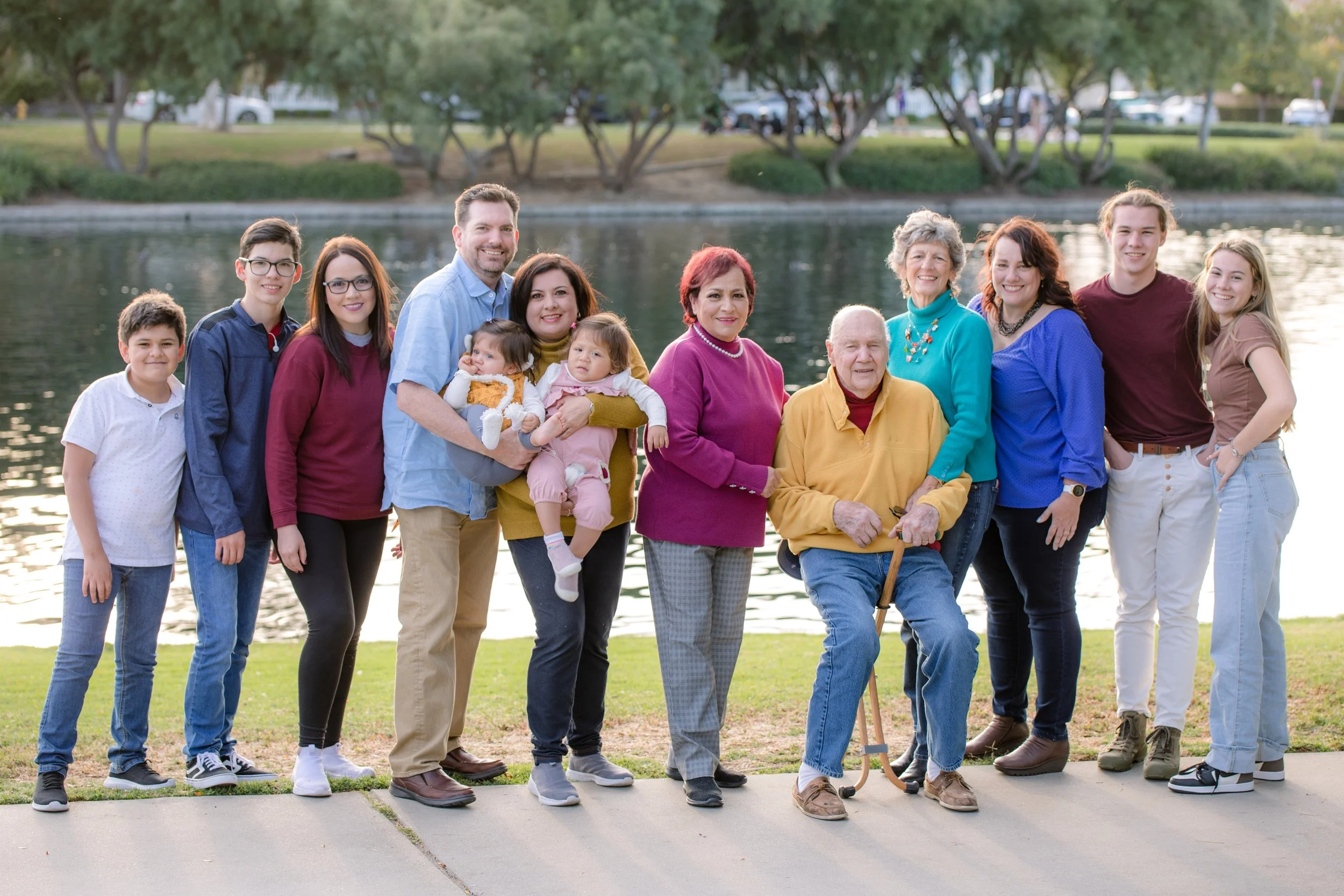
During her time in California, Irene met and married Aaron Smith, from San Diego, California, whose family has roots in Tennessee and Kentucky. Their marriage expanded the family across Guatemala and the United States and also strengthened the network of people advocating for ACD Guatemala’s mission. This cultural and family connection has remained deeply valuable, helping share the organization’s work, build relationships, and broaden support for its causes. Today, Irene and Aaron are two essential pillars in the United States, raising awareness of the realities facing Guatemalan communities and helping carry the mission forward alongside the rest of the family.
With support from people connected to different organizations, including Methodist Churches, friends from different backgrounds, ACD Guatemala began organizing medical outreach activities and exploring initiatives. These early experiences in Guatemala helped the organization build relationships, learn to coordinate visiting groups, and assess its capacity to manage community activities while keeping costs low. The Muñoz Argueta family covered the costs of establishing the organization, meetings, travel, and logistics. That investment of time and resources became ACD Guatemala’s seed capital.
In 2013, Lucía traveled to the United States for four months to explore connections and introduce the new organization. She visited North Carolina and was invited to Tennessee, where she shared ACD Guatemala’s vision. Gradually, she visited different organizations, churches to present the initiative. These conversations opened relationships with people who wanted to understand the situation, visit the country, and contribute to the first activities.
In the meantime, between 2014 and 2019, more than 335,000 Guatemalan children were traveling without a parent or legal guardian to the U.S. were recorded reflecting the scale of a profound humanitarian crisis. Children were undertaking journeys without their parents and facing deeply uncertain futures. For ACD, this raised an urgent question about the conditions pushing children to leave and the opportunities Guatemala needed to offer its youngest generation.
Lucía continued researching migration and its effects on families, drawing on Irene’s experience and exchanges with organizations and networks in Guatemala and the United States. This work led to a book she published in 2015 as part of her master’s studies, with testimonies gathered in Guatemala and the United States, primarily in California. It strengthened the connection between research and program development, helping ACD Guatemala recognize that even modest community initiatives needed to address the deeper circumstances shaping children’s and families’ lives.
Through these testimonies and community exchanges, Lucía and Irene paid close attention to the fears families described, the expectation in some communities that children would leave after completing sixth grade, and the pressures of extortion, the lack ot services and health. They also considered bullying, barriers within schools to welcoming children and responding to their needs, and the child labor and exploitation that had affected many children for years. These experiences called for programs with more than a short-term benefit: initiatives that could strengthen protection, belonging, educational continuity, and meaningful opportunities within Guatemala.
These concerns were especially significant in a country with a large young population. For context, the UNFPA and CONJUVE study based on Guatemala’s 2018 Census found that people aged thirteen to thirty represented 35.6 percent of the population. For the family and ACD Guatemala, investing in their education, health, and opportunities meant investing in the country’s future.
ACD Guatemala began shaping its programs around these findings. Education alone would not be enough: the programs needed to help create conditions in which people could envision a future in Guatemala and have meaningful opportunities to remain. This required sustained local work that went beyond providing classes or a clinic. It meant bringing together community members, local organizations, and leaders to discuss why families felt compelled to leave and why a child might already see migration as the only possible future.
Those conversations and relationships helped shape familiar activities around a deeper purpose: strengthening people’s connection to their communities, nurturing hope in Guatemala, and opening possibilities for moving forward. Education, health, creativity, and community relationships became connected parts of that effort. As the approach gained meaning and momentum, more people became interested and new partners joined, gradually expanding the work.
By around 2016, the work had grown, and ACD Guatemala’s founders and board saw the need for a more lasting local presence: a center where people could gather and where programs could develop over time. César’s belief that an organization should become a place people could turn to was taking practical shape. Local alliances helped reduce costs and make use of spaces, skills, and resources already available in the community.
Through her work as a university professor, Lucía was familiar with participatory approaches to learning and community engagement. She understood the importance of working with people’s own knowledge, values, and circumstances, and of finding a reason for them to participate that mattered in their everyday lives.
Perhaps the most unexpected part of this beginning was what first brought large numbers of children to ACD Guatemala. They did not initially come for a scholarship or an educational program. They came to play soccer. They wanted somewhere to play, spend time with friends, and simply be children.
In the Western Highlands communities where the organization was building relationships, families described limited access to safe places for children to play. Some recreational spaces required access to private property, while some public spaces raised concerns about alcohol and drug use and other risks to children’s safety. ACD Guatemala formed an alliance with a local family who made land and a soccer field available. The field was dusty and covered with stones, but it offered a place to gather and play. It became the first connection that drew hundreds of children to the organization.
Gradually, play was paired with other activities: an hour of soccer alongside twenty minutes of reading or a creative activity. Children arrived because they wanted to play, and those visits opened opportunities to read, imagine, learn, and build relationships. The experience helped ACD Guatemala develop a model for engaging the community as well as delivering programs. It showed that participation could grow from something people already valued, allowing trust and interest in new activities to develop over time.
ACD Guatemala’s local connections made possible donations of goods, volunteer time, and expertise that helped reduce costs and strengthen the organization’s work. Lucía’s work as a university professor also opened connections with students and other sources of collaboration. Sonia continued contributing her teaching, culinary, and entrepreneurship skills. From a distance, Irene continued contributing valuable information that helped the organization understand the factors driving people to undertake risky migration journeys and the vulnerabilities she observed among migrants and their families. Methodist friends and people from other backgrounds joined these efforts as they began to believe in the mission.
Together, these contributions allowed resources to go toward building a lasting foundation: a home for the organization and a committed team. What began as a family dream and investment grew through a network of people and organizations contributing in different ways.
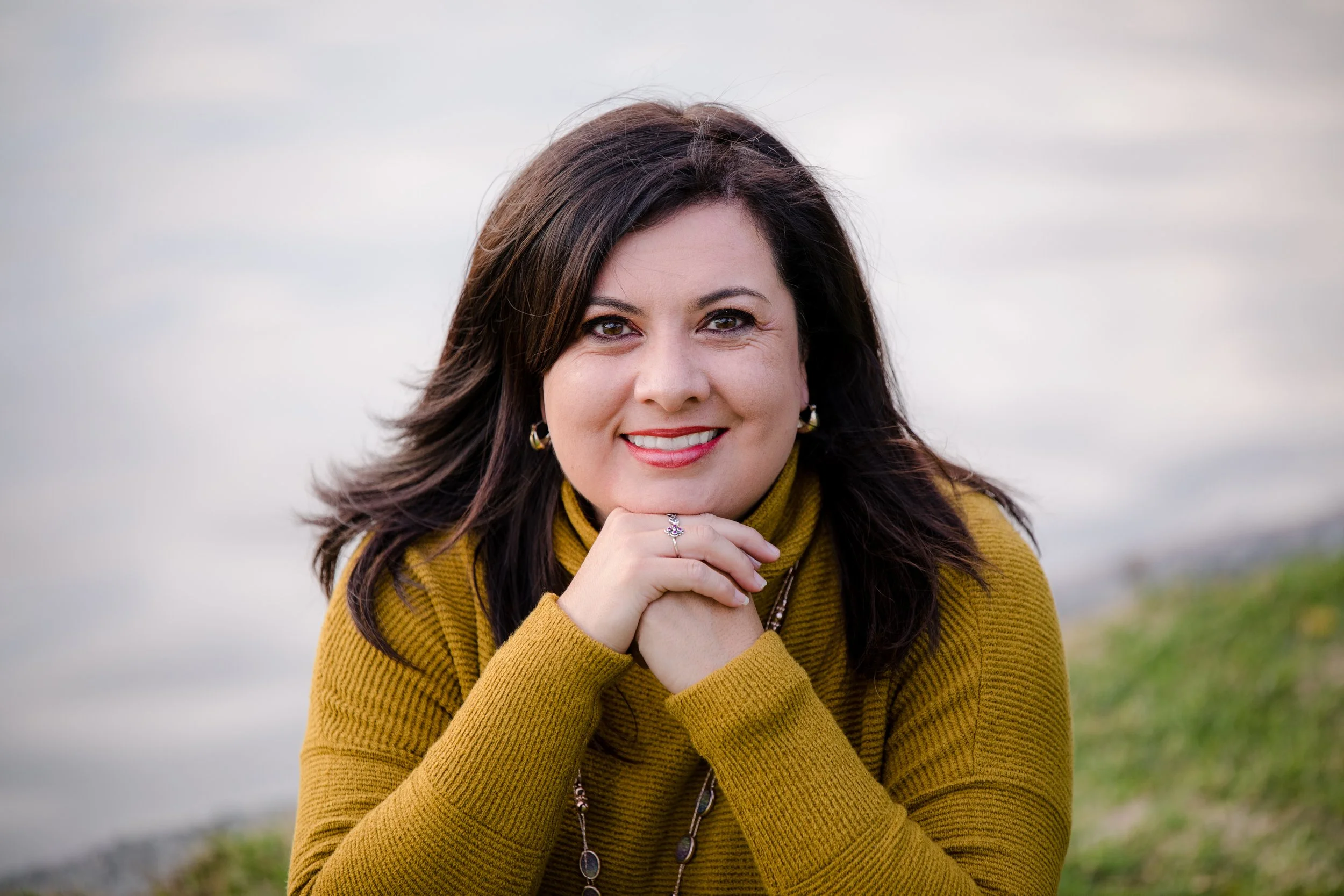
In 2021, César Muñoz died unexpectedly of natural causes, unrelated to COVID. He had lived to see meaningful progress toward the purpose he had worked so hard to advance. His absence was an enormous loss for the family and ACD Guatemala. Lucía then took on responsibility for leading and continuing this work, supported by Sonia, Irene, the team, and a wider local and international network of supporters.
With this foundation of family commitment, community relationships, and shared purpose, ACD Guatemala has navigated the pandemic, the loss of César, inflation, and the effects of international conflicts. Each stage has required adaptation and learning. The concerns about migration and human mobility that shaped its early work have become increasingly visible, reinforcing the importance of creating opportunities, hope, and a sense of belonging within Guatemala.
Through its ongoing research on human mobility and its community outreach initiatives, ACD Guatemala has become an important point of reference on migration issues in western Guatemala and beyond. Its work seeks to deepen understanding of the structural reasons people leave and to bring together students, volunteers, mission teams, and collaborators from different places and backgrounds. Together, they contribute to locally grounded solutions that strengthen opportunities and help make the Guatemalan dream possible. Today, ACD Guatemala also serves as a resource for consultation, connecting research and community experience with institutional collaboration. Since 2017, it has maintained direct partnerships with international organizations, including the United Nations, as well as government institutions and universities, including universities abroad. These relationships support joint initiatives related to public policy, advice on program design and implementation, and training for public officials to deepen their understanding of communities and their needs.
Today, ACD Guatemala offers a range of programs that address people’s needs in a comprehensive way. Its team continues organizing, evaluating, connecting, learning, and creating alongside communities. Young people, volunteers, church missionaries and interns bring energy and fresh perspectives to its daily work. Interns arrive from Guatemala, the United States, Europe, and other parts of the world, making the organization a meeting place for different experiences and cultures. Research remains an ongoing part of its work, alongside a commitment to serving with love and humility.
As she approaches her seventy-fifth birthday, Sonia remains actively involved, with a deep love for the mission. She volunteers her time to teach women cooking skills that can help them generate their own income, sharing her knowledge with women in rural communities as well as international visitors. She also prepares delicious international meals for volunteers and offers cooking classes that bring people together across cultures. Through her hospitality, teaching, and generosity, Sonia continues creating opportunities for learning, connection, and greater independence.
Irene plays an important role in strengthening connections through ACD International and in maintaining relationships with California and understanding of migrant communities. Together with Aaron, she helps bring attention to the realities facing families in Guatemala and build support for opportunities that strengthen their roots at home. Their work contributes to a shared aspiration: a Guatemalan dream in which people can find hope, belonging, and a future in their own country.
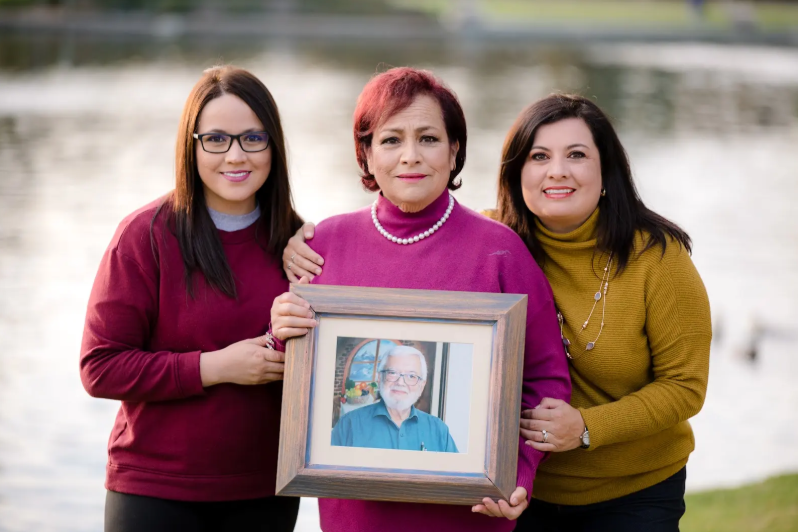
The memory of David and César remains present in the life of the family and the organization. The permanent clinic holds a special place in that legacy, enriched by friends in the United States whose generosity and commitment have helped make continued care possible. Their contributions are part of a wider story of people choosing to stand alongside others.
Lucía continues working hard through each stage of ACD Guatemala’s development, leading with vision, purpose, humility, and a commitment to serving others. César’s memory remains a source of strength as she works alongside Sonia, Irene, Aaron, the team, and the many local and international partners who help carry the mission forward.
The family and ACD Guatemala are deeply grateful to everyone who has joined this dream, now shared by hundreds of people. Each contribution of time, knowledge, resources, and care has helped transform a family’s concern into a lasting commitment to the community. Together, they remain committed to serving those who need it most, learning from one another, and creating opportunities for a more hopeful future in Guatemala.
This story shows how a purpose born in the heart can endure when people choose to give it their time, their talents, and their care. David and César’s memory lives on through that shared commitment, carried forward by a family and a community willing to keep serving through loss, uncertainty, and change. Their legacy continues wherever that commitment helps someone find dignity, belonging, and the possibility of building a future in Guatemala.
The family and ACD also honor the memory of the friends and partners who contributed to this mission and are no longer here with us. Their contributions remain woven into the life of ACD, and their memory is held with lasting affection and gratitude.
Special thanks go to those who believed in the project from its earliest days and whose dedication helped make ACD International possible. The family and ACD Guatemala recognize every member of ACD International’s board with deep appreciation for the responsibility they carry, the relationships they nurture, and their continued commitment to this shared humanitarian purpose.